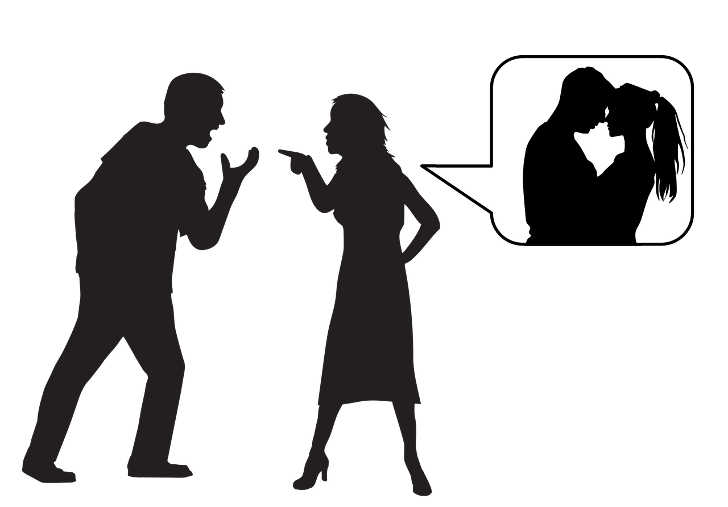
How can one provoke narcissistic rage? It may seem trivial, but it’s surprisingly easy. Anything diverting attention from them or criticizing them triggers it. This article delves deeper into this phenomenon, offering illustrative examples.
‘The Narcissist’
To begin, it’s essential to define ‘the narcissist’ in this article. I’m referring to someone with Narcissistic Personality Disorder (NPD).
Narcissism varies in intensity. For instance, those with mild NPD might not display visible anger at everything.
For further clarity, consider reading the article ‘What is a Narcissist?‘
Provoking Narcissistic Rage through Enjoyment
Invoking narcissistic rage can be as simple as indulging in activities you enjoy. Toxic individuals despise witnessing others’ happiness.
The manifestation of this rage varies among narcissists. Some may openly insult you, while others subtly make you feel guilty for enjoying yourself.

The covert narcissist might subtly say something like: “Shouldn’t you be doing something else? You’re wasting your time.”
But if you were to stop your hobby for them, they would criticize you for giving up your passion. With a narcissist, you can never do right!
Narcissists Hate Celebrations
For the same reason, narcissists also despise birthdays (of others), holidays, etc. Precisely because other people enjoy them and they are not the center of attention.
An overt narcissist may try to ruin things outright, so others can’t enjoy themselves. For example, by picking fights. A covert narcissist, on the other hand, handles this more subtly.

For instance, I recall how my mother, a covert narcissist, would always go the extra mile for someone’s birthday. She appeared caring, tending to guests, yet it was all to draw attention to herself. Despite guests urging her to sit, she seldom complied. Sitting down meant blending in, intolerable for a narcissist.
Provoking Narcissistic Rage by Receiving a Compliment
A narcissist becomes furious when others receive praise, tarnishing your confidence with devaluation. This pattern is evident in various scenarios, such as workplace compliments.
Devaluation by a Narcissist
In some of my previous articles, I’ve mentioned a colleague displaying openly narcissistic traits, and it’s worth highlighting again. Once, when I received a compliment for my breadth of knowledge, he couldn’t tolerate it, quipping, “Herman only knows things that are of no use.”
Such devaluation tactics instill a subconscious belief that you shouldn’t take pride in your accomplishments. Children raised by narcissistic parents often develop a fear of failure and tend to procrastinate in life.

Personal Experience with Procrastination
Having grown up with a narcissistic mother, I’ve struggled with procrastination. Seeking her approval, I often deferred decisions to her, only to be misled. But after cutting ties with her, I’ve learned to trust my judgment, indifferent to her opinions.
The narcissist’s partner shouldn’t receive compliments either
Narcissists detest when others, even their own partner, receive compliments. Unlike most people who appreciate praise for their partner, narcissists take offense.
To them, any positive remark directed elsewhere undermines their perceived superiority. Whether it’s a colleague or their partner, narcissists view others as mere extensions of themselves, expected to validate their false sense of self rather than have autonomy.
Evoking Narcissistic Anger: The Role of Happiness
Narcissists harbor deep-seated resentment towards genuine happiness, exposing their emotional fragility. Incapable of experiencing authentic joy themselves, they often resort to feigned happiness. However, their emotional disconnect renders them intolerant of others’ genuine expressions of happiness, leading to bouts of rage and resentment.

Narcissists manifest their anger towards others’ happiness in various ways. For instance, they may shoot you an angry glance while conversing with friends, leaving you perplexed about your actions. Consequently, the joyous atmosphere swiftly dissipates, replaced by a somber mood.
Stirring Narcissistic Rage: Social Interaction Dynamics
One surefire way to incite narcissistic fury is by engaging in conversations with other emotionally balanced individuals. Narcissistic partners harbor an aversion to external connections as it threatens their dominion over your perception and reality. By fostering healthy relationships, one gains clarity on the manipulative tactics employed by the narcissist.
Consequently, narcissists embark on a gradual campaign to isolate their partners from their support network of family and friends. Reflecting on my upbringing, I recall a decline in family gatherings, orchestrated, I suspect, by my narcissistic mother. This isolation extended to her new partner, whom she met during their shared volunteer work.
However, once they commenced their relationship and cohabitation, discord ensued, leading to their withdrawal from volunteering—a pursuit that held great significance for her partner, now another victim ensnared in her web of manipulation.
Invoking Narcissistic Rage: Diverting Attention
A potent trigger for narcissistic anger is diverting attention away from the narcissist, even if it involves your own children!
Narcissists crave being the focal point in any situation. Thus, directing attention elsewhere is a cardinal sin in their eyes.
In the context of a partner showing attention to the children, deeper dynamics unfold. By nurturing a bond with the children, the partner establishes an emotional connection that the narcissist lacks. This threatens the narcissist, as they cannot form such connections themselves.

As I’ve previously discussed, partners of narcissists often struggle to maintain their individuality. Similarly, narcissists view their children not as autonomous individuals but as extensions of themselves. Consequently, they resent any emotional connection their partner fosters with the children, projecting their own emotional shortcomings onto the situation.
Eliciting Narcissistic Rage: Flaunting Your Talent
Feeling proud of your talent? Beware, as this might trigger narcissistic rage. Narcissists detest others’ talents, especially if they cannot claim credit for them.
When you express pride in your abilities, a narcissist may attempt to belittle you, labeling you as arrogant or self-centered. This reaction stems from their envy of talents they lack themselves.
Narcissists often seek to appropriate others’ achievements, portraying themselves as instrumental in their success. Consequently, they resent any acknowledgment of individual effort and talent.
Challenging their narrative can provoke intense anger and hostility.
Provoking Narcissistic Rage: Not Yielding the Spotlight
Narcissists cannot bear being sidelined from attention. Be it at a social gathering or in the workplace cafeteria, they crave the spotlight and disdain playing a supporting role.
Take, for instance, the overtly narcissistic coworker cited earlier. During our breaks, if he found himself not at the center of our conversations and laughter, he’d invariably interject. Failing to regain the limelight, his irritation became palpable.

Triggering Narcissistic Rage: Exposing Errors
Do you aim to ignite a narcissist’s fury? Simply point out a mistake!
Even with good intentions, critiquing a narcissist infuriates them. While they freely criticize others, they can’t tolerate criticism directed at them. The mere suggestion of imperfection ignites their anger, even over trivial matters or jests. Narcissists interpret any criticism, even in jest, as a personal attack, fueling their rage.
Facebook Debate: Unveiling Narcissistic Reactions
I once encountered a prime example of narcissistic rage on Facebook. It involved an acquaintance of a friend, with whom I had a Facebook connection.
I had noticed her incessant posts, seemingly with nothing better to occupy her time. Particularly, her child became a frequent subject, even when unwell, with photos shared on Facebook.
During a discussion thread, I innocently joked about a typo made by an acquaintance. He returned the jest, and all seemed light-hearted.
However, when the aforementioned individual made a similar error, I made a playful comment. Yet, she failed to grasp the humor and demanded an explanation. Despite my attempts to clarify, she responded with fury, accompanied by angry emojis. It felt akin to conversing with my narcissistic mother.

Ultimately, she blocked me for daring to jest, even with self-deprecation, about a mistake.
While this incident doesn’t definitively label her a female narcissist, it strongly suggests narcissistic tendencies.
Self-Reflection: Understanding My Actions
In hindsight, it may not have been the wisest decision to jest about a mistake with someone exhibiting narcissistic tendencies. Yet, in the midst of casual conversation, I impulsively made the remark.
Upon reading Robert Cialdini’s book “Influence,” I was reminded of this incident. Cialdini discusses the human inclination to align with past actions.
Having recently joked with an acquaintance about a typo, when presented with a similar situation by the Facebook contact, I felt compelled to maintain consistency and jest once more.
It’s insightful to reflect on your own behavior. Perhaps narcissists should take note too 😉
Car Argument: A Brush with Narcissistic Rage
I recall a telling incident involving my narcissistic mother. Once, during a car ride, our conversation veered towards road rules. With a background in driving instruction, I’m well-versed in this domain.
Instructors emphasize precise terminology, distinguishing between priority and yielding passage. Despite this, colloquially, we often use “priority” for both. In a reflex, I corrected myself, opting for the legal term ‘yield passage’. However, my mother perceived it as a correction aimed at her, triggering a sudden eruption of fury.

Even if it were a minor correction, a narcissist can escalate it into a full-blown confrontation. What starts as an ordinary conversation swiftly devolves into an argument with a narcissistic individual.
The Takeaway: Understanding Narcissistic Rage
This article sheds light on the triggers that incite “narcissistic rage,” highlighting how narcissists become irate over commonplace occurrences that normal individuals perceive as benign.
Victims often internalize blame or bend over backward to avoid provoking the narcissist. However, the narcissist’s fury is irrational and pathological.
No amount of self-effacement or placating can prevent their outbursts. Eventually, the narcissist will find a reason to explode.
Does this narrative resonate with you? Have you encountered similar situations? Share your insights or experiences in the comments below. Knowledge is power!